Let's be honest. When you're running a small business on a tight budget, every penny counts. Staff costs, rent, stock, utilities. The list goes on. Add decent software to that and you're looking at hundreds a month just to keep the lights on.
But here's the thing. AI has changed the game. Not in a sci-fi way. In a practical, money-saving way. Tools that would have cost thousands five years ago are now free or nearly free. And some of them are genuinely good.
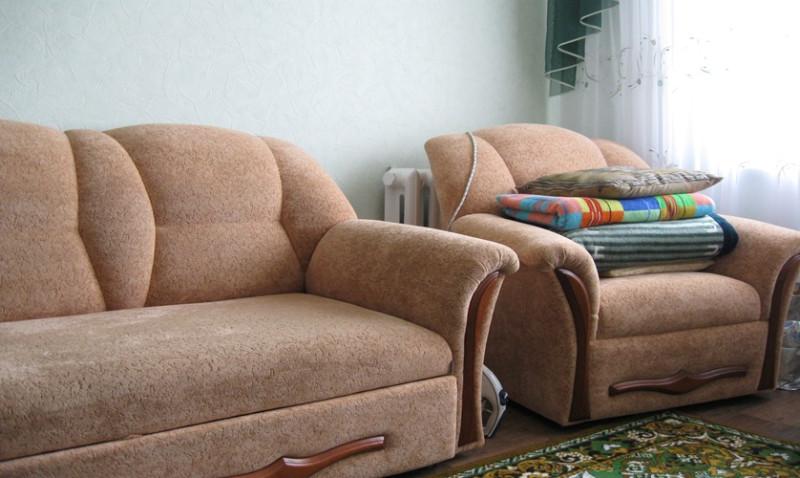
If you're in the furniture retail space, whether you sell online, from a showroom, or both, these tools can help you compete with bigger players. They handle tasks that normally need hiring extra staff.
Writing and Content Creation
ChatGPT's free tier is where most people start. You get 40 messages every three hours. That's enough to write product descriptions, social media posts, and email newsletters without paying a subscription.
For a furniture retailer, this matters. Writing "comfortable leather sofa" fifty times gets tedious. ChatGPT can generate variations that actually sell. Feed it your product spec and ask for three different descriptions targeting different customer types. It takes two minutes instead of thirty.
Gemini (Google's tool) offers similar functionality. The free version has fewer restrictions than ChatGPT's, so you can run longer conversations without hitting a paywall.
Neither tool is perfect. ChatGPT sometimes sounds corporate and stiff. Gemini occasionally hallucinates facts. But for a small business owner who's also the copywriter, it cuts your writing time in half.
Design and Images
Canva's free plan is legitimately useful. It's not fancy, but it works. You get access to thousands of templates, stock images, and design elements. Create social media graphics, price tags, email headers. All free.
The paid plan costs £9.99 a month and adds more templates and stock. But the free version handles most small business needs fine.
For generating product mockups or room setting ideas, DALL-E 3 (via ChatGPT Plus) costs £15 a month. Before you dismiss that, consider what you'd pay a designer to create room mockups showing your furniture in different spaces. £15 versus £200 per image is a no-brainer.
Alternatively, Ideogram and Leonardo.AI both offer free image generation. The quality varies, but they're improving fast. Use them for social media inspiration or to visualise ideas before investing in professional photography.
Customer Service and Admin
Tidio offers a free chatbot for your website. It handles basic customer questions, takes orders, and captures contact details. You can train it on your FAQs, shipping policies, and returns information.
For a furniture business, this means handling "What's your delivery time?" and "Do you offer assembly?" without hiring someone to answer emails.
Zapier's free tier connects different apps automatically. Link your email to a spreadsheet. Send new enquiries to a notification service. Create workflows that save hours of manual work. The free plan limits you to 100 tasks per month, but that covers most small businesses.
Data and Analytics
Google Analytics 4 is free and tells you exactly what's happening on your website. Who visits, what they click, where they drop off. This matters if you're selling online or want to understand foot traffic patterns in your showroom.
Most furniture retailers don't use this properly. You could be learning why customers abandon shopping baskets or which product categories get the most attention. That information is free. You just have to look.
Google Sheets itself is an underrated business tool. It's free, it syncs across devices, and it integrates with Zapier. Use it for inventory tracking, pricing lists, customer records, or sales pipelines. It's not fancy, but it works and costs nothing.
Social Media Management
Buffer's free plan lets you schedule posts across three networks (Facebook, Instagram, Twitter). You can plan two weeks of content in one sitting and let it post automatically. That alone saves hours.
For a furniture business, consistency matters. Customers see you regularly and start to trust you. Buffer makes that possible even if you're busy with customers or deliveries.
Meta Business Suite (Facebook's own tool) is also free and works fine if you only use Facebook and Instagram. Fewer features than Buffer, but no cost at all.
Email Marketing
Brevo (formerly Sendinblue) offers 300 free emails per day. That's roughly 9,000 per month. For small businesses, that's plenty. You get automated emails, segmentation, and basic reporting.
Build a mailing list of customers interested in new furniture arrivals or sales. A single email campaign to 500 customers might generate £2,000 in sales. Cost to you? Nothing.
The Catch
Free tools have limits. ChatGPT's free tier occasionally gets slower during peak hours. Free image generators don't match professional photographers. Canva's free templates are sometimes generic.
They're also not supported in the same way paid tools are. If something breaks, your recourse is limited.
But here's the reality. A scrappy small business owner using free AI tools will outpace a competitor who pays for everything and never uses it. Implementation matters more than budget.
What Actually Works
Start with one tool. If you're struggling with writing, use ChatGPT for a month. Learn it. See if it saves time. Then add another. Building a stack of free tools slowly is smarter than trying to master ten things at once.

Trending articles
-
 Flat Pack Furniture UK: Tips to Build ...
Mar 2026
Flat Pack Furniture UK: Tips to Build ...
Mar 2026
-
 How to Care for Leather Furniture UK: ...
Mar 2026
How to Care for Leather Furniture UK: ...
Mar 2026
-
 Small Living Room Furniture Ideas UK: ...
Mar 2026
Small Living Room Furniture Ideas UK: ...
Mar 2026
-
 Solid Wood vs MDF Furniture: Which is ...
Mar 2026
Solid Wood vs MDF Furniture: Which is ...
Mar 2026
-
 How to Choose a Sofa That Lasts: UK ...
Mar 2026
How to Choose a Sofa That Lasts: UK ...
Mar 2026
-
 Dining Tables and Chairs: A Practical ...
Mar 2026
Dining Tables and Chairs: A Practical ...
Mar 2026