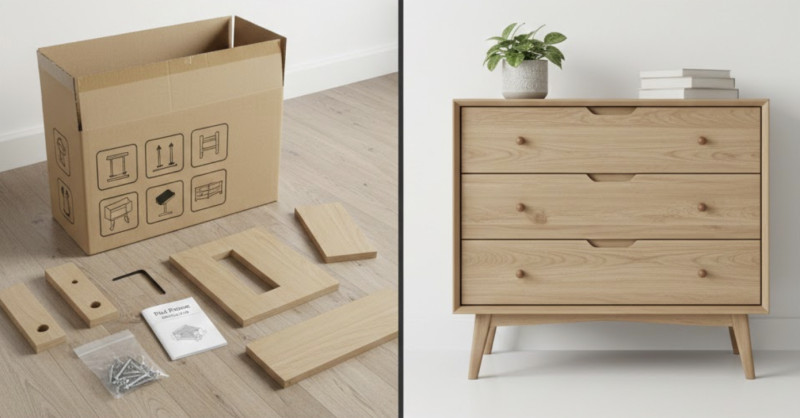
When shopping for new furniture in the UK, you'll encounter two main options: flat pack (also called self-assembly) and pre-assembled pieces. Flat pack furniture arrives in compact boxes with components you assemble following instructions, whilst pre-assembled furniture comes fully built and ready to use immediately upon delivery. Your choice depends on budget, delivery logistics, quality expectations and the space available in your home.
Many UK retailers now offer both options for the same design, so you can pick whichever suits you better.
Cost Comparison: Where You'll See Price Differences
Flat pack furniture typically costs 30-50% less than pre-assembled equivalents. Manufacturers save money on warehouse space, transport fuel and labour by shipping components rather than finished pieces.
Assembled furniture costs more because manufacturers pay for labour, storage facilities and specialised logistics to handle larger items. But the lower upfront cost of flat pack can disappear once you add in tool purchases, replacement parts if pieces arrive damaged, or professional assembly fees.
Here's what to budget for:
- Base purchase price—flat pack typically 30-50% cheaper
- Delivery charges—assembled furniture usually costs more to ship
- Tools and materials—you may need screwdrivers, Allen keys or other equipment
- Assembly labour—hiring professionals costs £50-£300+ depending on complexity
- Replacement parts—damaged components may need buying separately
Premium retailers sometimes include assembly costs in the product price, so the higher sticker price actually represents better overall value.
Delivery and Space Requirements
Flat pack's compact packaging means faster delivery. Most UK retailers deliver within 3-5 working days, whilst assembled furniture typically takes 2-3 weeks due to storage and specialist courier needs.
Your home layout matters significantly. Assembled sofas, wardrobes and beds struggle to fit through doorways, hallways and staircases in older UK properties. Flat pack items solve this problem—they pass through standard doorways when boxed. You'll need decent floor space to lay out components during assembly though.
Storage is another factor. Flat pack boxes take minimal space before you assemble them, which helps if you're buying multiple pieces at once. Assembled furniture needs immediate placement or temporary storage in large rooms or gardens, which creates real challenges for flat dwellers.
Assembly Process and Time Investment
Assembly time depends on the furniture type and manufacturer quality. Simple pieces like bookcases or coffee tables take 30-90 minutes for most people. Complex wardrobes, storage beds or modular seating systems can take 4-8 hours or longer.
Several things affect how smoothly assembly goes:
- Furniture complexity—basic designs assemble quicker than models with multiple drawers, shelves or mechanisms
- Instructions quality—detailed diagrams with clear labelling save considerable time
- Your mechanical aptitude—some people enjoy assembly, others find it frustrating
- Tool availability—having proper screwdrivers, drills and spirit levels helps
- Having a second person—many items assemble faster with two people, especially beds and large cabinets
Rushing or ignoring instructions leads to wobbly furniture, misaligned drawers or weak joints. Take your time and double-check measurements.
Quality and Durability Considerations
Flat pack furniture quality varies widely. Contrary to what many assume, self-assembly furniture isn't inherently inferior to pre-assembled pieces. Many high-end retailers offer flat pack options using identical materials and construction methods as assembled ranges.
Assembly quality directly impacts longevity. Properly assembled flat pack furniture lasts as long as pre-assembled pieces. Loose joints, misaligned components or incorrect assembly can significantly reduce lifespan though. Tighten bolts annually to maintain structural integrity.
Assembled furniture offers consistency since trained professionals assemble items in controlled conditions. But this doesn't guarantee better quality—the underlying materials and design matter more than assembly method. Some budget retailers produce cheap assembled furniture specifically designed for short lifespans.
Read customer reviews that specifically mention durability and assembly experience. Feedback from people who've owned items for several years is more useful than price comparisons alone.
Environmental and Sustainability Aspects
Flat pack's compact packaging reduces transport emissions significantly compared to bulkier pre-assembled furniture. Fewer delivery vehicles and less fuel consumption create a smaller carbon footprint. Reduced warehouse space also means manufacturers use less energy.
However, this advantage disappears if assembly failures force you to throw out and replace furniture. Some flat pack manufacturers also use excessive plastic packaging, offsetting environmental gains. Check if retailers use recyclable or compostable packaging.
Assembled furniture sometimes lasts longer due to better initial assembly quality, which can offset higher transport emissions over many years of use. Look at the total lifecycle impact, not just delivery emissions.
Making Your Choice: Key Decision Factors
If you want immediate convenience and have easy access for delivery vehicles, choose assembled furniture. If budget matters and you enjoy DIY or can find affordable local assembly help, flat pack offers excellent value.
You'll find flat pack economical when furnishing multiple rooms at once. Families moving into new properties benefit from flat pack's staggered delivery schedules. Busy professionals willing to pay for convenience should prioritise assembled options.
Your home's layout matters. Period properties with narrow hallways may physically prevent assembled furniture from being carried inside, making flat pack your only option. Modern properties with wide doorways can accommodate either approach.
Comparing UK Retailers and Your Options
The UK furniture market offers extensive choice. Budget retailers like IKEA specialise in flat pack, whilst premium brands such as John Lewis and specialist manufacturers offer both formats. Mid-market retailers increasingly let customers select assembly preferences for identical pieces.
When comparing options, check delivery terms, assembly guarantees, return policies and component availability for repairs. Some retailers offer professional assembly services at checkout, combining flat pack savings with convenience.
Get quotes from at least three retailers offering your desired style. Compare delivery costs, assembly options and customer service. Read recent reviews focusing on delivery experience and assembly instructions. Request quotes from different providers to identify the best overall value for your situation.
Frequently Asked Questions
Is flat pack furniture as durable as assembled furniture?
Flat pack furniture is just as durable as pre-assembled pieces when properly assembled. The quality depends more on the underlying materials and design than on how the item was assembled. However, poor assembly technique can reduce lifespan.
How much can I save by choosing flat pack?
Flat pack furniture typically costs 30-50% less than identical assembled versions. Additional savings come from lower delivery costs, though you may spend money on tools or professional assembly services.
Can flat pack furniture fit through my front door?
Yes, flat pack items fit through standard doorways when boxed. This is one of the main advantages for people in older properties with narrow hallways and tight corners.
How long does flat pack assembly typically take?
Simple pieces like bookcases take 30-90 minutes. Complex items such as wardrobes or storage beds can take 4-8 hours or longer. Having a second person helps significantly.
Should I hire professional assembly services?
Professional assembly costs £50-£300+ depending on furniture complexity. It's worth considering if you lack time, tools or confidence in DIY assembly. Compare this cost against your time value and the risk of poor assembly.
Which option is better for the environment?
Flat pack furniture has a lower carbon footprint during transport due to compact packaging. However, the total environmental impact depends on how long you keep the furniture. Items that last longer offset higher transport emissions.

Trending articles
-
 Flat Pack Furniture UK: Tips to Build ...
Mar 2026
Flat Pack Furniture UK: Tips to Build ...
Mar 2026
-
 How to Care for Leather Furniture UK: ...
Mar 2026
How to Care for Leather Furniture UK: ...
Mar 2026
-
 Small Living Room Furniture Ideas UK: ...
Mar 2026
Small Living Room Furniture Ideas UK: ...
Mar 2026
-
 Solid Wood vs MDF Furniture: Which is ...
Mar 2026
Solid Wood vs MDF Furniture: Which is ...
Mar 2026
-
 How to Choose a Sofa That Lasts: UK ...
Mar 2026
How to Choose a Sofa That Lasts: UK ...
Mar 2026
-
 Dining Tables and Chairs: A Practical ...
Mar 2026
Dining Tables and Chairs: A Practical ...
Mar 2026