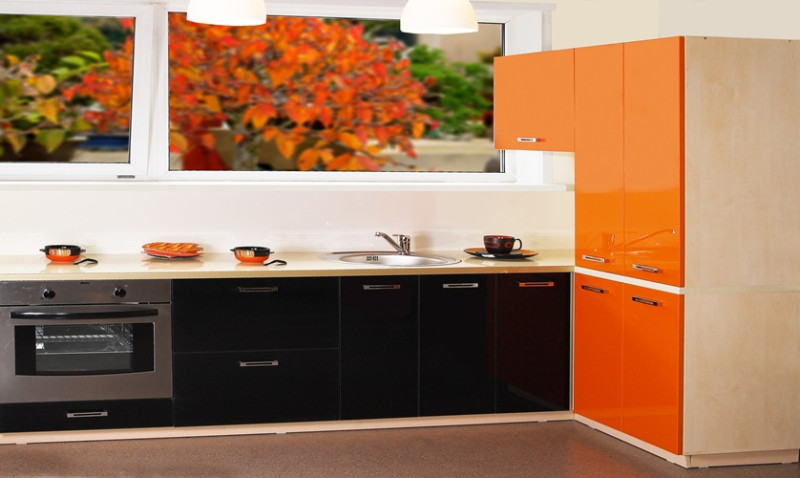
A joiner tells a customer their fitted wardrobes will transform a bedroom. A furniture restorer promises to bring a Victorian table back to life. A kitchen fitter says the installation will be seamless and professional. These are all perfectly reasonable claims. But the customer is sitting at home, scrolling through their phone, and they don't know this business from Adam.
Words matter. But they only go so far. A customer can read testimonials, check reviews, even call for a chat. Yet none of that compares to seeing the actual work.
This is where before-and-after photos become invaluable.
What Before-and-After Photos Actually Do
They remove doubt. When someone is considering whether to hire your trade business, they're asking themselves a simple question: can you deliver? A photograph answers that instantly. It's evidence.
For furniture businesses specifically, this matters even more. A customer might be deciding between three different upholsters. One has a website with vague descriptions. Another has before-and-after photos of five sofas they've restored, showing worn velvet transformed into pristine fabric with tight stitching and fresh piping. Who gets the job?
Before-and-after photos also solve a communication problem. Customers often struggle to imagine what's possible. They know their conservatory is too cold or their kitchen storage is chaotic, but they can't picture the solution. When you show them a similar project transformed, something clicks. Suddenly it's real to them.
The Trust Factor
There's psychology at work here too. According to research from Trustpilot and similar platforms, customers trust visual evidence more than written claims. A business that confidently shows its work comes across as professional and proud of what it does. A business that doesn't? It raises questions.
In the furniture sector, this is critical. A bespoke sofa maker building a custom three-seater sectional is asking a customer to spend £2,000 to £4,000 sight unseen during the manufacturing process. Before-and-after photos from previous commissions say: "We've done this dozens of times. Here's proof." That's worth money to a nervous customer.
Real Examples From the Trade
A kitchen fitter in Manchester posts six before-and-after sets from recent installations. The before photos show dated units, poor layout, yellowed doors. The afters show modern cabinetry, proper lighting, organised storage. Within three months, their inquiry rate went up by 40 percent according to their Google Analytics.
A furniture restorer in Brighton runs a small Instagram account with nothing but before-and-afters. A wardrobe covered in water damage becomes a showpiece of polished wood. A leather chair with torn seams and faded colour becomes supple and rich again. The account has modest followers, but their actual job pipeline is solid because every potential customer can see exactly what restoration means.
These aren't anecdotes. They're how trade businesses actually grow.
How to Actually Do This Right
First, take both photos from the same angle. This matters more than people realise. If the before shot is taken from waist height and the after from above, the comparison feels wrong and the impact diminishes.
Second, get the lighting consistent. Photograph both at the same time of day if possible, or adjust your camera settings to match. Poor lighting makes even excellent work look mediocre.
Third, context helps. For fitted furniture or kitchen installs, include a wide shot showing the room, then a closer detail shot. For smaller pieces like chairs or tables, a simple straight-on comparison works. For restoration work, a tight detail shot of the problem area (the scratch, the stain, the broken joint) followed by the fixed version tells the story efficiently.
Fourth, shoot in decent resolution. Blurry or low-contrast photos undermine your message. Modern smartphone cameras are more than adequate if you're paying attention to composition.
Don't over-edit. A slight colour correction is fine. Heavy filtering or unrealistic brightness makes people suspicious. Customers want to see what they're actually paying for.
Where to Use Them
Your website should feature a portfolio gallery. Not a wall of 50 photos, but a curated selection of 12 to 20 of your strongest work. Organise by project type: fitted wardrobes, kitchen installations, sofa reupholstery, table restoration. Make it easy for a potential customer to find work similar to what they need.
Google Business Profile is crucial. Posts on your business profile with before-and-after photos get significantly more engagement than text-only updates. Google also ranks businesses that post regularly as more active and trustworthy.
Social media, particularly Instagram and Facebook, thrives on this content. A before-and-after carousel post on Instagram will almost always outperform promotional text. People stop scrolling for transformation photos. It's genuine interest, not advertising fatigue.
Even email marketing works better with before-and-afters. If you're sending a newsletter to past customers or prospects, include a recent project. It reminds people what you do and gives them something worth looking at.
The Overlooked Benefit
Here's something most businesses miss. Before-and-after photos also help with team morale and standards. When your upholsterers or installers see their work displayed proudly, it reinforces that you value quality. It sets a visual benchmark for what you expect. New team members can see the standard you've established. They understand the detail that matters.
Stop Waiting
If you're running a trade business on furniture-deal.co.uk or anywhere else, and you haven't been systematically documenting your work in before-and-after photos, you're leaving money on the table. Your competitors probably aren't making the same mistake.
Start now. Your next job is a chance to prove something. Document it properly. Show people what you're capable of. Watch what happens to your inquiry rate.

Trending articles
-
 Flat Pack Furniture UK: Tips to Build ...
Mar 2026
Flat Pack Furniture UK: Tips to Build ...
Mar 2026
-
 How to Care for Leather Furniture UK: ...
Mar 2026
How to Care for Leather Furniture UK: ...
Mar 2026
-
 Small Living Room Furniture Ideas UK: ...
Mar 2026
Small Living Room Furniture Ideas UK: ...
Mar 2026
-
 Solid Wood vs MDF Furniture: Which is ...
Mar 2026
Solid Wood vs MDF Furniture: Which is ...
Mar 2026
-
 How to Choose a Sofa That Lasts: UK ...
Mar 2026
How to Choose a Sofa That Lasts: UK ...
Mar 2026
-
 Dining Tables and Chairs: A Practical ...
Mar 2026
Dining Tables and Chairs: A Practical ...
Mar 2026